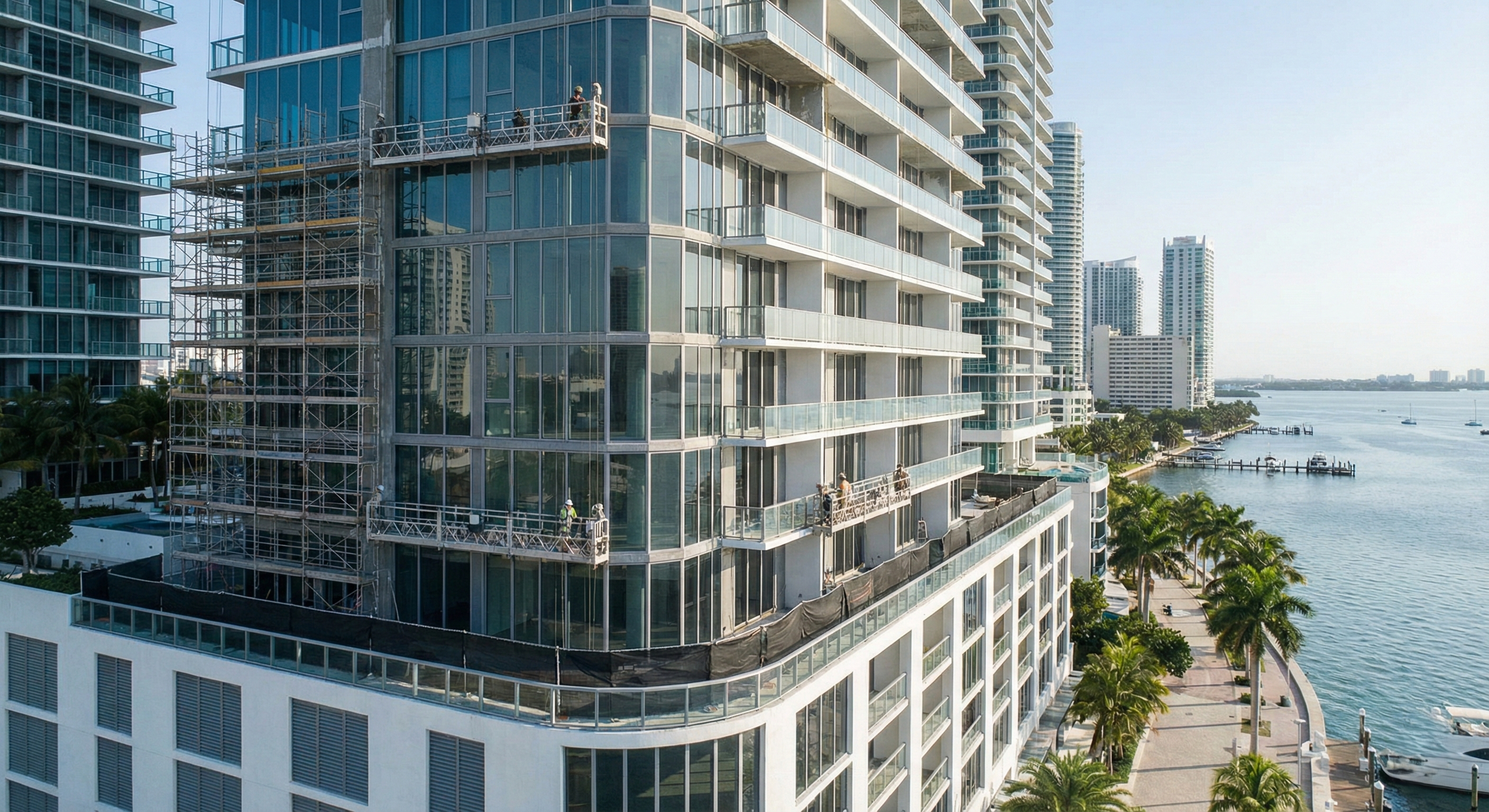
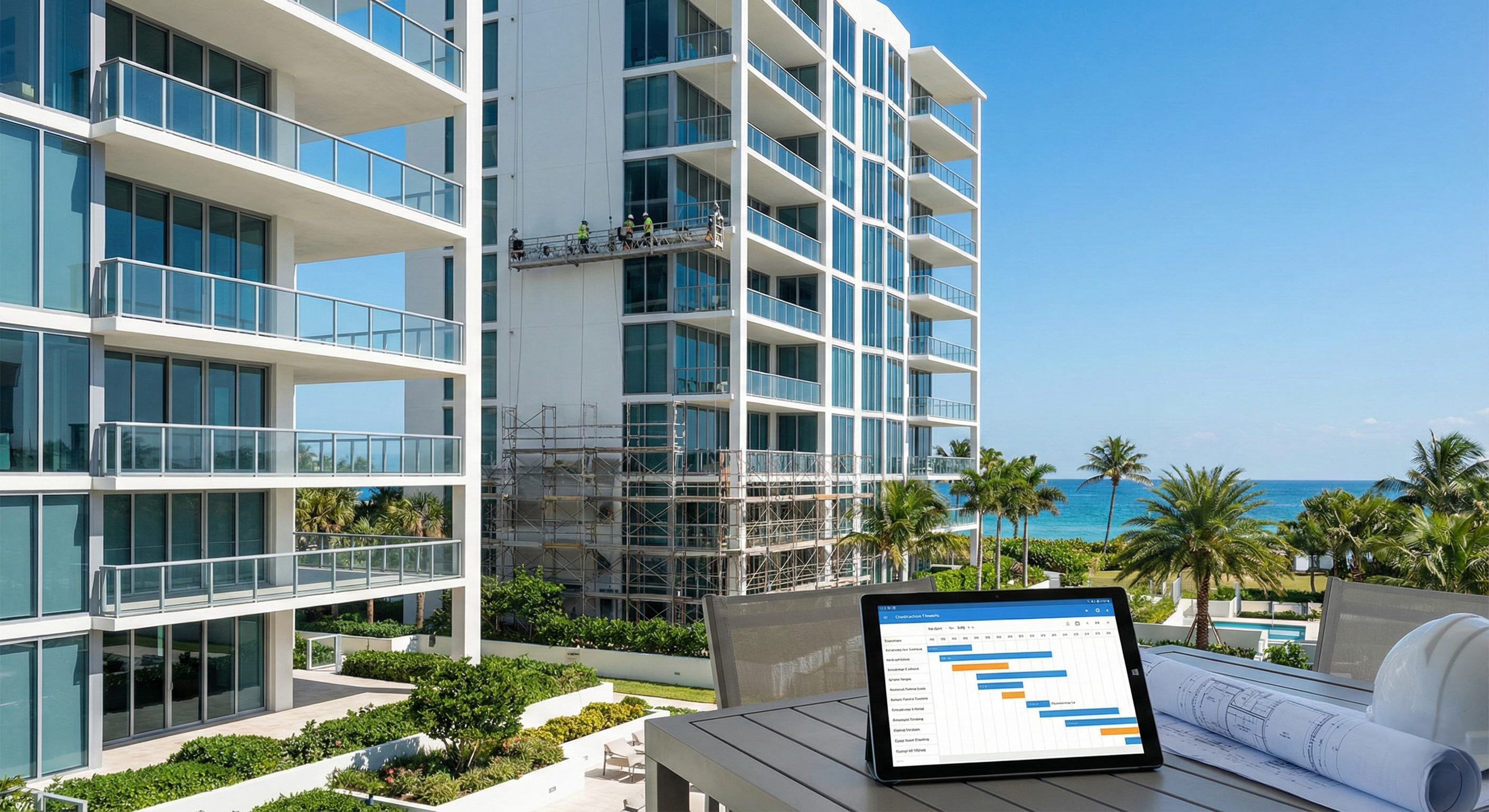
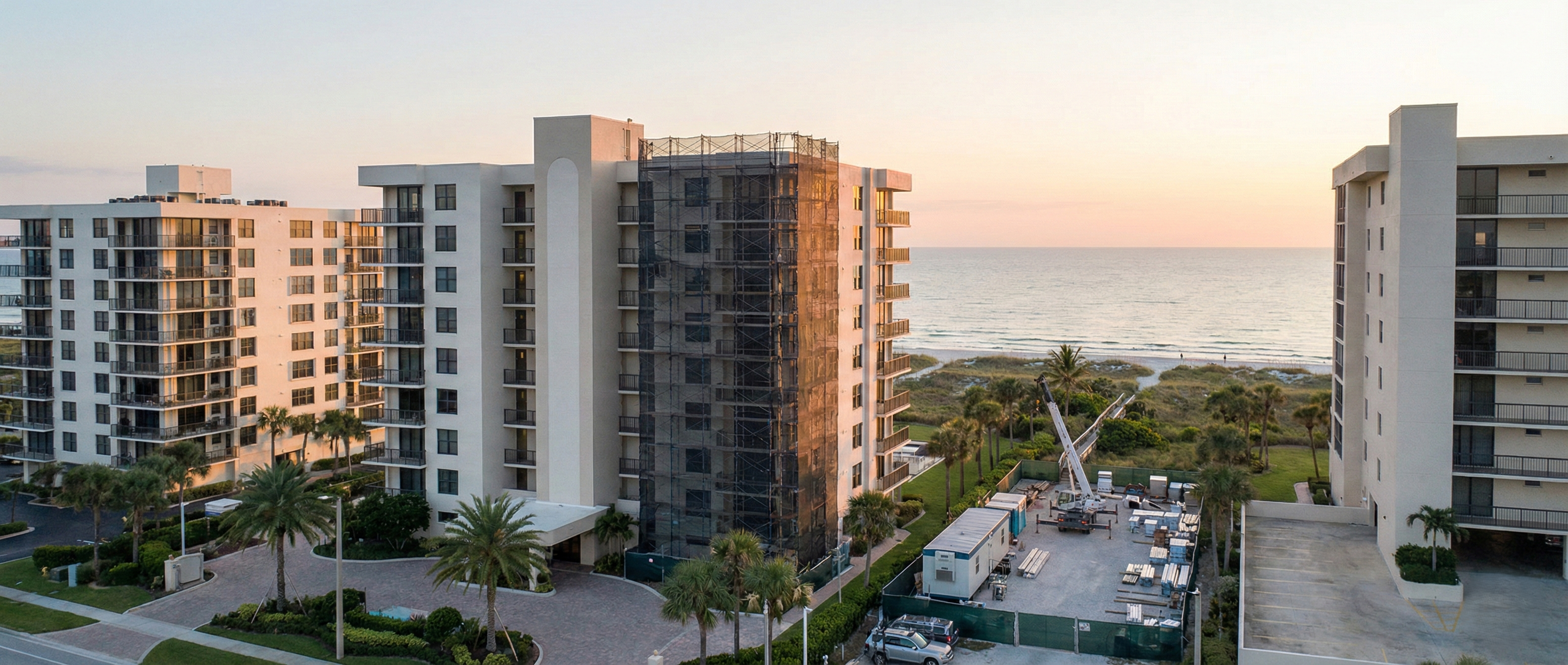
Florida’s new milestone inspection and Structural Integrity Reserve Study (SIRS) requirements reshape how every high-rise condominium and cooperative association plans, funds, and executes major repair projects. Beginning in 2025–2026, boards responsible for buildings three stories or higher must complete mandatory structural inspections, maintain fully funded reserves for critical components, and convert technical engineering findings into real construction plans. This article explains what the law requires, why deadlines matter, and how associations can protect themselves from financial and construction risk—especially when coordinating large-scale concrete, balcony, façade, and waterproofing projects.
Key Takeaways
- Milestone inspections (Phase 1 & Phase 2) are mandatory for condo and co-op buildings 3+ stories.
- SIRS must be completed by most associations no later than December 31, 2025 (some can align with milestone inspections through 2026).
- Condominium associations can no longer waive reserves for structural components identified in SIRS.
- Milestone and SIRS findings usually translate into real-world projects: concrete, balconies, waterproofing, structural repairs.
- Boards consistently underestimate timelines, scope creep, bidding complexity, and owner communication needs.
- An experienced Owner’s Rep reduces financial risk by controlling scope, bids, contractors, and change orders.
Why Milestone Inspections and SIRS Are Now Non-Negotiable
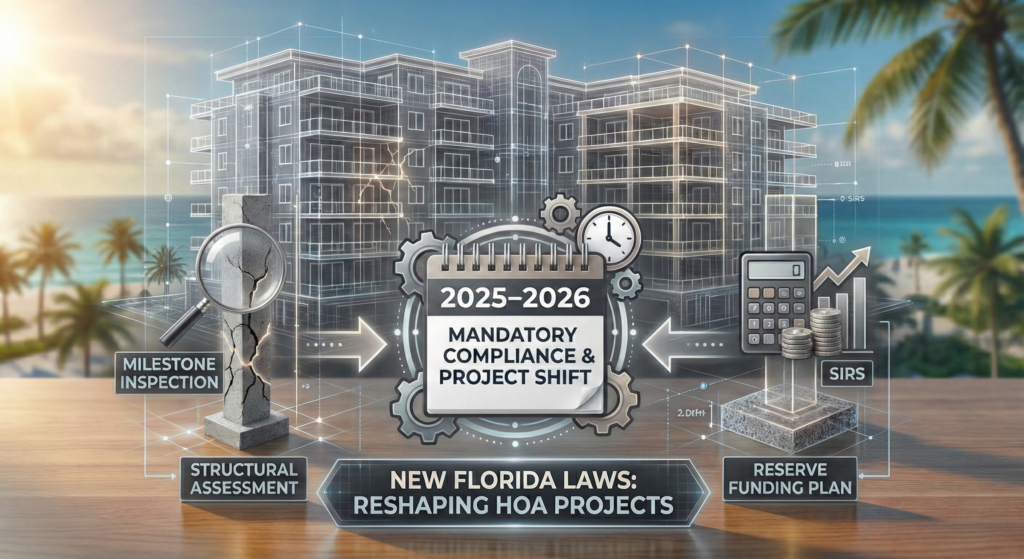
The legislative changes introduced through SB 4-D, SB 154, and subsequent updates were a direct response to structural safety concerns in Florida’s aging coastal buildings. These laws require:
- Milestone Inspections – structural evaluations performed by a licensed architect or engineer to determine whether a building is safe.
- SIRS (Structural Integrity Reserve Studies) – formal reserve studies that identify critical structural components and define mandatory funding levels.
These two requirements work together: the milestone inspection identifies current structural issues, while SIRS ensures the association is financially prepared to address them. Boards cannot opt out, delay, or waive these obligations—doing so risks insurance problems, lender issues, and potential liability for the association.
Key Deadlines for Existing vs. New Buildings
Milestone and SIRS deadlines depend on a building’s age and height, but the overall pattern is clear:
Milestone Inspections
- Applies to condominium and cooperative buildings three stories or higher.
- The first inspection is generally due when a building reaches 30 years of age (25 years if near the coastline).
- Existing older buildings fall into accelerated compliance windows leading through 2025–2026.
- Inspections repeat every 10 years thereafter.
SIRS Deadlines
- Most condo and co-op associations must complete their first SIRS by December 31, 2025.
- Buildings with milestone inspections due in 2025–2026 may align SIRS with that inspection—but no later than December 31, 2026.
- Updated reserve funding rules mean associations cannot waive or underfund structural reserves.
Because these deadlines link directly to engineering availability, board readiness, and construction market volatility, associations that delay planning often face increased costs and scheduling bottlenecks.
What Boards Usually Underestimate (Scope, Cost, Timelines)
Even well-organized boards are usually surprised by the real-world impact of milestone and SIRS obligations. The most common underestimations include:
- The gap between Phase 1 and Phase 2. Phase 1 is visual; Phase 2 may involve destructive testing and can uncover hidden damage.
- How quickly findings translate into mandatory repairs. If structural distress is noted, the association must act promptly.
- Cost escalation and bid variability. Structural repair contractors, concrete restoration companies, and waterproofing specialists are in high demand.
- Resident impact. Balcony closures, parking garage shutdowns, and noise disruptions require a coordinated communication plan.
- Administrative load. Boards must interpret engineering reports, adjust budgets, update reserves, and communicate with owners and lenders.
Linking Inspections to Actual Projects (Concrete Repairs, Balconies, Garage Decks)
Milestone inspections and SIRS are not theoretical documents—they create a pipeline of predictable projects. Typical follow-ups include:
- Concrete restoration (slabs, beams, columns)
- Balcony and railing repairs or replacement
- Garage deck waterproofing and structural reinforcement
- Façade remediation, stucco repair, and sealant renewal
- Roof systems and parapet corrections
Associations that treat these findings as a structured capital plan—rather than isolated repairs—control costs significantly better. Boards often benefit from professional project management and construction oversight during this phase.
How an Owner’s Rep Protects Your Association During SIRS-Driven Projects
An Owner’s Representative acts solely in the interest of the association—never the contractor. For complex milestone- and SIRS-driven projects, an Owner’s Rep provides stability, transparency, and financial protection.
Key responsibilities include:
- Scope clarity: Translating engineering findings into clear, bid-ready project scopes.
- Bidding control: Running competitive bids, eliminating lowball tactics, and comparing apples to apples.
- Cost protection: Reviewing contracts, limiting change orders, and identifying unnecessary scope.
- Schedule management: Coordinating engineers, contractors, inspectors, and property managers.
- Quality assurance: Verifying work progress and preventing shortcuts.
Falke HOA specializes exactly in this area. As described on What Is an Owner’s Rep?, the firm represents the association’s interests throughout planning and construction, ensuring projects stay on budget and on schedule.
Practical Case Scenario: From Inspection Report to Fully Managed Project
Below is an example timeline that demonstrates how boards should move from compliance to execution:
1. Milestone Inspection Completed
Engineers deliver Phase 1 results and indicate whether Phase 2 (invasive testing) is required. If deficiencies are detected, the board must begin planning immediate action.
2. SIRS Findings Reviewed
The SIRS outlines which components require funding, expected remaining life, and estimated repair costs over the next decade. This becomes the financial roadmap.
3. Scope Development & Cost Validation
The Owner’s Rep works with engineers to translate reports into a clear project plan. Cost assumptions are tested against real market pricing and refined to avoid overestimation.
4. Competitive Bidding & Contractor Selection
The project team issues bid packages, reviews proposals, checks contractor qualifications, and negotiates contracts. Falke HOA’s cost management services ensure the association avoids inflated pricing.
5. Construction & Oversight
The Owner’s Rep provides direct oversight, verifies work progress, manages communication, and protects the board from scope creep and delays. This includes coordination with city inspectors and engineering teams.
6. Project Closeout & Reserve Update
Upon completion, updated costs and project outcomes feed back into future SIRS updates and long-term planning. Falke HOA supports boards through development management for multi-year capital programs.
FAQ
What is the difference between a milestone inspection and SIRS?
A milestone inspection assesses a building’s current structural condition, while SIRS defines what structural components must be funded long-term. Milestone = safety assessment. SIRS = financial plan to maintain that safety.
Do all associations need to comply?
Requirements apply to condominium and cooperative buildings three stories or higher. Traditional single-family HOAs may not fall under these laws, but master associations overseeing mid-rise buildings often do.
What happens if an association misses the deadline?
Missing milestone or SIRS deadlines can lead to insurance issues, financing delays for buyers, and increased board liability. It also risks emergency assessments if repairs become urgent.
Why is an Owner’s Rep recommended for milestone-driven projects?
Because these projects are technical, high-liability, and expensive. An Owner’s Rep protects the association from unnecessary costs, contractor manipulation, and timeline overruns—ensuring engineering requirements are correctly executed.